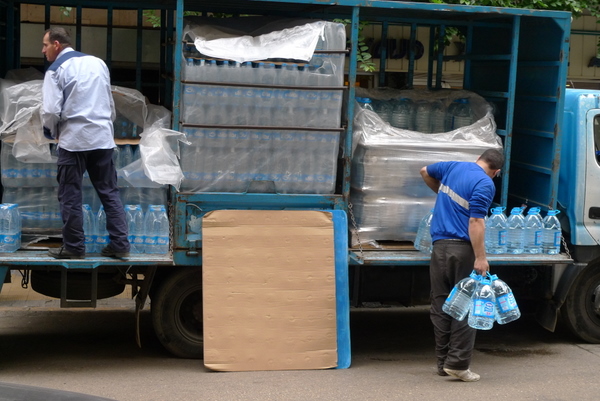
blue in hamra
A welcome delivery in the heat of a July afternoon.
blue in hamra
A welcome delivery in the heat of a July afternoon.

impeccable
Beirut is known for its see-and-be-seen culture. At work or play, the Lebanese like to dress to the nines. Glad rags are the order of the day, every day. Sunglasses are a permanent fixture, eyebrows are subjugated, and manicures are as fresh as a jus d’orange pressé. Thirty-somethings blitz the sales in full-face make-up but remain impeccable thanks to the domestic help that they’ve brought along to carry their growing pile of purchases and keep the kids quiet by stuffing them with chocolate. Matriarchs in full hijab wedge themselves into café chairs on pavements complaining about back-pain, bright stilettos peeking out from under their black folds. The maid gets to put the bags down and, like the children, have an ice-cream and play – or rather to play mummy, which is not quite the same thing. But of course she doesn’t need a sit-down since she’s not the one wearing stilettos. The other mothers sit back and sip their espresso, languidly comparing purchases and indiscreetly commenting on the appearance of passers-by from behind their sunglasses.

oven and peel
So it is sometimes refreshing to deal with some down-to-earth Lebanese whom you might not bump into strutting the Beiruti triangle between tanning salon, manicurist and designer stores. My man’ouché kiosk is an ideal place for that. Not only does it serve what are arguably the best mana’iche in town, they come with a big smile and a mini Arabic lesson from the vivacious woman whose family runs the joint. Her friendly, outgoing manner is the only Read the rest of this entry »



© 2011 ginger beirut is proudly powered by WordPress | Constructor Theme
Entries (RSS) and Comments (RSS).